
From Stalled to Healing: How Bioengineered Skin Is Changing Wound Care
By Trish Yerges for Grande Ronde Hospital
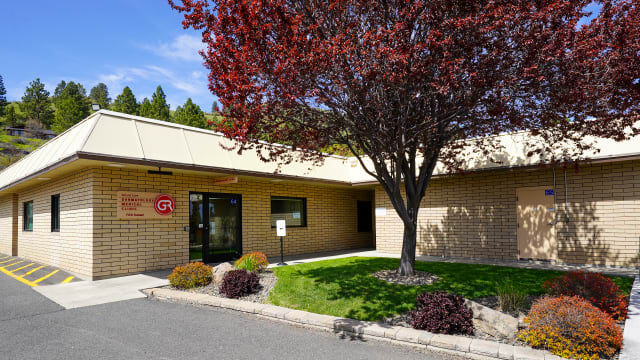
The Grande Ronde Hospital (GRH) Wound Clinic, located at 700 Sunset Dr., Suite F, has experienced significant growth over the past 15 years, evolving from a single-room clinic in the SurgiCenter that offered basic wound care to a high-tech clinic utilizing bioengineered skin dressings derived from donated placental and umbilical cord tissues.
Roxanna Stephens, FNP, CWON-AP, launched the Wound Clinic in 2010. Since then, she and her colleague, Shelly Scott, RN, have introduced advanced wound-healing techniques that promote tissue regeneration and wound closure for patients with chronic wounds and ostomies.
Stephens’ expertise has grown with her education. She earned her Certified Wound Ostomy Nurse credential in 2008, became a Family Nurse Practitioner in 2017, and completed her Advanced Practice Wound and Ostomy certification in 2019.
Scott earned her nursing degree from Blue Mountain Community College in Pendleton. After 10 years at St. Luke’s in Baker City, she joined GRH’s Regional Medical Clinic in 2015. She transitioned to the Wound Clinic in 2022, where she now works alongside Stephens using the latest innovations in wound care.
Among the clinic’s most groundbreaking tools are placenta-derived skin substitutes and umbilical cord-based biomaterials, which are biocompatible and designed to aid in the healing of complex wounds.
How does it work?
“They take the placenta, dehydrate it, and remove the DNA so that it’s just structural cells,” Stephens explained.
Once processed, the tissue resembles a thin, parchment-like mesh. It contains no blood components but is made from the amnion and chorion membranes of the amniotic sac. These are cleaned, dehydrated, and preserved as sheets or meshes in various sizes to reduce waste.
Stephens often uses a product called EpiFix, a sheet-style placental dressing. A 4x4-inch piece can cost around $1,500; however, Medicare typically covers most treatments.
Scott emphasized that all tissue used in these treatments comes from voluntary C-section donations—never from abortions.
“It’s not a skin graft that just covers the wound and closes it,” Stephens said. “It works more like stem cells—it signals the body’s healing mechanisms to activate.”
The dressing contains proteins, such as cytokines, that stimulate tissue growth and reduce inflammation. It also forms a scaffold for new tissue to develop, improving healing and minimizing scarring.
“Our patients appreciate how simple the treatment is and how quickly they see results,” Stephens added.
These placental dressings are used for a variety of chronic wounds, including pressure ulcers, diabetic foot wounds, burns, and peristomal ulcers—wounds that occur around a stoma site.
Umbilical cord tissue is processed differently. It is dehydrated into a fine powder, which is then used during surgery to fill deep wound beds. One such product, AxioFill, is used by GRH general surgeon Dr. Brandy McLendon.
“The powder is rehydrated with sterile water, expands in size, and encourages regeneration from the wound base,” Stephens said. Once the wound bed is filled, a placental sheet dressing may be applied to close the wound.
“Roxanna recently used this method to successfully cover an exposed tendon on a patient’s foot,” Scott added. “It was pretty amazing.”
In addition to treating patients in the clinic, Stephens and Scott also provide care in partnership with home health agencies, nursing facilities, rehabilitation centers, and hospice agencies across Union County. Their outreach ensures that patients with persistent wound and ostomy challenges receive consistent, expert care.
If you are experiencing chronic wounds or ostomy complications, speak with your primary care provider and ask for a referral to Roxanna Stephens at the GRH Wound Clinic.